
CHORAL

Gregorio Allegri
Miserere
No music from the Renaissance has attracted such fame and fascination as Gregorio Allegri’s Miserere: a setting of Psalm 51 written for the Vatican Holy Week services in 1638 by an alto in the Sistine Chapel choir. Performed every year since, under Michaelangelo’s exalted ceiling, the music was kept under lock and key to sustain its mystery. Copies were strictly forbidden, under threat of excommunication; exceptions were made only for the Holy Roman Emperor, and the King of Portugal. The story of fourteen-year-old Mozart transcribing the piece after listening just twice is well-known, but it was Mendelssohn’s transcription, sixty years later, which altered the fate of the piece forever. The performance Mendelssohn heard was a fourth too high; decades later, a lazy copyist accidentally slipped five bars of this higher version into the Miserere. Printed and reprinted across the world in the Grove Dictionary of Music and Musicians, this error, and the resulting solo top C, eventually became the norm.

Domenico Scarlatti
Stabat Mater
Born in the same year as both Bach and Handel, comparatively little is known of Domenico Scarlatti’s life. He was born in Naples, where his father Alessandro was a celebrated composer of opera and oratorio. It was here that he wrote the Stabat Mater, while he was still young; many years later he would escape his father’s shadow by moving to the Iberian Peninsula, where he worked for both the Spanish and Portuguese royal families. Today, Scarlatti is known mostly for his keyboard works, but the Stabat Mater shines as the crowning achievement of his choral output. With ten movements, each scored for ten voices, the work is ambitious in scale. All voices are treated equally and independently (rather than divided into two choirs, as in Komm, Jesu, komm), and the writing is virtuosic. This offers limitless potential for textural contrast, which Scarlatti exploits richly. One remarkable trait of the Stabat Mater is Scarlatti’s devotion to certain individual words, often treated as the cornerstone of their respective movements. In the first movement, this word is lacrimosa (‘weeping’), used for not one but two major cadence points. In the second, the metaphorical gladius (‘sword’) piercing Mary’s heart is reverenced with pure, almost sacred harmony. Shortly thereafter, quis (‘who?’) is passed rapidly passed between voices, mimicking an onlooking crowd. Angular, descending intervals and long, languising melismas in the fourth movement paint the words moriendo (‘dying’) and desolatum (‘forsaken’). Each of these words provides a focal point through which we share Mary’s anguish, pride and spiritual devotion. One particularly special moment occurs in the eighth movement, at the words quando corpus morietur (‘when my body dies’). Here, time and harmony stand still; this is the moment (just as in Komm, Jesu, komm) when we achieve tranquility and accept our fate with Christ. With one final plea for heavenly salvation, the music rises to a jubliant Amen.

J.S. Bach
Komm, Jesu, komm
‘I am the way, the truth, and the life: no man cometh unto the Father, but by me.’ These words from St John’s Gospel were the inspiration for Paul Thymich’s poem Komm, Jesu, Komm, which presents a wearied individual, longing for death and the calm embrace of Christ. This is one of Bach’s most tender motets, and the only one to set poetry rather than Biblical text. The work opens with single-word invocations to Christ passed between the two choirs: Komm. The rhetoric and dialogue are reminiscent of Venice: of Giovanni Gabrieli and his legacy, which spread to Germany through his prodigy Heinrich Schütz. Dialogue continues and lines lengthen, drawing towards cadences so expressive they could almost be Brahms. Where Thymich quotes St John directly, Bach relaxes into a gentle dance metre. Here, suffering gives way to tranquility, and pleading gives way to joyous, even ecstatic acceptance of our fate with Christ. Long melodic lines interweve and soar with a lyricism usually found in Bach’s solo writing. Komm, Jesu, Komm ends with the choirs merging to sing a lyrical Aria. The harmony suggests a chorale, but the melody is higher, freer, and more complex. This is our final prayer to Jesus for his love and protection.
Frank Martin
Mass for Double Choir
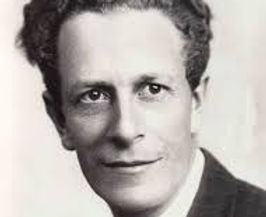
Swiss composer Frank Martin was born in 1890, the youngest of ten children. He began improvising on the piano as a young child, and had several minor compositions to his name before entering any formal musical training. He studied Mathematics and Physics at University as per his father’s wishes, but turned back to music after just two years. Martin was known mostly as an orchestral composer, though it is this mass setting for which he is best known in the UK today. Martin wrote the mass in the 1920s, but it wasn’t performed until 1963; in the composer’s own words: ‘I didn’t want it performed at all. I was afraid that it would be judged from an entirely aesthetic standpoint. The Mass was, at the time, a matter entirely between myself and God. I felt that a personal expression of religious belief should remain secret and hidden from public opinion.‘ Martin’s textures are extraordinary and symphonic, the second choir often playing the role of a string orchestra by sustaining long chords as a backdrop to the first choir. His polyphonic writing hints at Gregorian chant, Palestrina and Bach (the composer whom Martin revered above all others), and in his harmony we hear echoes of Impressionism: Ravel, Debussy, even Vaughan Williams. The opening of the Kyrie is meandering and melismatic, growing with intensity as the parts interweave and crisp rhythms punctuate the texture. The Gloria, which is unusual for beginning and ending softly, features both dance-like rhythms (‘Gratias agimus tibi’) and monkish chanting (‘Domine Deus’). The moment of Christ’s birth in the Credo (‘et incarnatus est’) is one of quiet ecstasy: a shimmering pianissimo and gently shifting harmony. News of His resurrection flits between voices in lively pentatonic figurations; whispers at first, with bells in the distance, peaking at the prophecy of His Second Coming. Small, repeated cells form the building blocks of the Sanctus, tied together by long falling figures in the upper voices. The resplendent Hosanna at the end of the Benedictus is perhaps the climax of the entire work, glistening with the Lydian harmonies Martin favours throughout the mass. In the Agnus Dei (written four years after the other movements), the two choirs play separate roles; like muted strings, the second choir pulses softly while the first choir chants in unison. Only at the very end do the two choirs come together in cadence, on the words dona nobis pacem: ‘grant us peace.’

Maurice Duruflé
Requiem
Commissioned by his publisher Durand and dedicated to the memory of his father, Maurice Duruflé’s Requiem is his masterpiece. That it is only opus 9 (the organ Suite, written fourteen years earlier, is opus 5) proves the meticulous care Duruflé took over his compositions, most of which remain unpublished. Of the dozens of Requiem mass settings that exist, Duruflé’s is among the most emotionally complex. While Mozart’s is dominated by anger (think of the Kyrie, or the Dies Irae), and Fauré’s dwells on heaven and angels (Sanctus, In Paradisum), Duruflé’s represents (in his own words) ‘the agony of man faced with the mystery of his ultimate end.’ This sense of mystery pervades Duruflé’s mellifluouos and Impressionistic soundscape. Almost all the melodic writing derives directly from Gregorian chant, gently reshaped to fit modern metres. Having been educated at a choir school renowned for its chant, plainsong was Duruflé’s compositional lifeblood; its melodies waft through the Requiem like incense through the side chapels of Saint-Étienne-du-Mont, the Parisian church where Duruflé was organist for over 50 years. This is exactly how the Introït opens; plainsong unfurls in the lower voices, with gentle, rolling semiquavers in the organ and a wordless halo from the sopranos and altos. The movement climaxes on the words et lux perpetua luceat eis (‘may light perpetual shine upon them’). The Kyrie opens with polyphony, and a trumpet ‘cantus firmus’ in the organ, recalling techniques of the Renaissance. The music builds to an impassioned plea, but eventually subsides to tranquility. The largest movement of the Requiem, the Domine Jesu Christe, begins with desperate cries for salvation from fiery torment. The Sopranos and Altos sing of heavenly peace, but there is no answer - the organ part meanders lifelessly. Prayers for the departed are offered by the baritone soloist, and the upper voices try once more. This time the organ responds, cadencing in F sharp major - the key of heaven. After the dark, formless mysteries of the previous movement, the Sanctus shimmers with heavenly light. The angels repeat the ‘Holy, holy, holy’ three times with increasing intensity, over a rippling organ accompaniment. One by one, voices burst in with their ‘Hosanna’s and the music erupts in euphoric climax. Where Fauré’s Pie Jesu offers innocence and purity, Duruflé’s is intensely mature. The mezzo soprano, unmistakably maternal, sings as one who has suffered and grieved; she finds solace in the notion of eternal rest. The next two movements offer respite and quietude: a peaceful Agnus Dei, with softly undulating organ accompaniment; and a meditative Lux Aeterna, whose most intimate moment hears the choir chant on a single note while the organ cycles through transparent, hymn-like harmonies. With the Libera Me come the final fires and fury of Judgement Day, and a final prayer for deliverance before the angels wing the departed souls to Heaven. A glimpse of salvation is revealed as the Sopranos sing Requiem aeternam dona eis Domine (‘grant them eternal rest, O Lord’), and the whole choir repeats the prayer for deliverance like a congregation in unison. The In Paradisum is perhaps the most Impressionistic movement; Duruflé’s luminous harmony shifts but never settles, even at the very end, evoking the eternal mystery of life after death. The organ ascends as the soul is carried to heaven; the choir sinks as the coffin is lowered into the ground. This movement marks, wrote Duruflé, ‘the ultimate answer of Faith to all the questions, by the flight of the soul to paradise.’

Sergei Rachmaninov
All-Night Vigil
‘The dearest reminiscences of my childhood are the four notes of the Novgorod Saint Sofia Cathedral bells, which I often heard when babushka (grandmother) took me to town on feast days. We also spent hours standing in the beautiful St. Petersburg churches. Being only a young greenhorn, I took less interest in God and religious worship than in the singing, which was of unrivalled beauty, especially in the cathedrals where one frequently heard the best choirs of Saint Petersburg. I usually took pains to find room underneath the gallery and never missed a single note. Thanks to my good memory, I also remembered most of what I heard. This I turned into capital – literally – by sitting down at the piano when I came home, and playing all I heard. For this performance my grandmother never failed to reward me with twenty five kopecks.’ – Sergei Rachmaninov When Nicholas I came to power in 1825, he was determined to shake off the cultural Europeanism that had governed the arts in Russia over the previous century. Where his predecessors had sought to emulate Italian and German creativity (held in the highest esteem in Europe), Nicholas envisioned a strong nationalist character for Russia. This was achieved in music by restoring and reviving Russia’s ancient Orthodox chants. It was these chants which the young Sergei Rachmaninov (1873-1943) heard in St Petersburg with his grandmother. Even into adulthood, Rachmaninov (according to his friend) ‘loved church singing very much and quite often, even in winter, would get up at seven o’clock in the morning and hail a cab in the darkness, mostly to drive to Taganka, to the Andronikov Monastery where he stood in the half-darkness of the enormous church through the whole liturgy, listening to the austere ancient chants sung by the monks in parallel fifths.’ Orthodox chants are the lifeblood of the All-Night Vigil, nourishing every melody and weaving themselves into the harmonic structure. While most movements include real Russian, Kievan or Greek chant, several (namely, movements 1, 3, 6, 10 and 11) feature artificial chant melodies, named ‘conscious counterfeits’ by the composer. Rachmaninov wrote the All-Night Vigil in just two weeks in February 1915 for the Moscow Synodal Choir, an ensemble of men and boys famed for their vast, immaculate legato and majestic command of dynamics. Although we regularly associate ultra-low bass parts with Russian music, such singers were hardly ten a penny; when first presented with the Niñe Otpushcháyeshɨ (movement 5), whose bassline famously descends to a bottom B flat in the final two bars, conductor Nikolai Danilin exclaimed ‘Now where on earth are we to find such basses? They are as rare as asparagus at Christmas!’ Celebrated only on special occasions, an Orthodox All-Night Vigil service lasts several hours. Participants are led through Vespers, Matins and Prime on a spiritual journey that takes them from last light to first light, sunset to sunrise, darkness to resurrection. Rachmaninov’s setting premiered in March 1915, with Danilin conducting. It earned a glowing reception and ‘tumultuous applause’ (despite the prohibition on applause after sacred performances). The Vigil received five repeat performances in less than a month. However, its success was short-lived. In the wake of the 1917 Revolution, organised religion was dismantled by the Bolsheviks, and the Moscow Synodal Choir was replaced with the non-religious People’s Choral Academy. The Rachmaninovs migrated to the USA as refugees, and Sergei rebranded as a concert pianist. His schedule was gruelling, and left little time for composition; in the 24 years he spent away from Russia, he completed only six new works. Rachmaninov died, aged 69, at his home in Beverley Hills. The Niñe Otpushcháyeshi was sung at his funeral, and he was laid to rest in New York, not, as he had wished, in Moscow. The All-Night Vigil lay untouched for decades, but not forgotten. In 1965, 50 years after its premiere, permission was granted for a single recording to be made, strictly for academic purposes. Although this recording was never published in the Soviet Union, it made its way to the USA and was finally released in 1973. A hundred years ago, Rachmaninov’s All-Night Vigil represented the end of an era. Today, it represents the power of light over darkness - that what was once extinguished may shine again.

Herbert Howells
Requiem
When Herbert Howells’ nine-year-old son Michael died suddenly from polio in 1935, the composer plunged into music-less melancholy. At the urging of his daughter Ursula, Howells channelled his sorrow into composition. For a long time it was believed that the Requiem was a product of Howells’ grief, but it was actually written a few years earlier. While in mourning, Howells reworked much of the Requiem material into Hymnus Paradisi – his masterwork for soloists, chorus and orchestra. Howells considered both these works private expressions of grief, and they remained unperformed for many years – Hymnus was premiered in 1950 and the Requiem in 1980, just a few years before the composer’s own passing. In his earlier years, Howells considered himself primarily an orchestral composer, but enjoyed limited success in this field. His large and venerated choral œuvre owes itself to a well-judged bet, when, in 1941, the Dean of King’s College Cambridge, lamenting the lack of suitable Te Deum settings, offered a guinea to whomever would write one for him. Thus, the Collegium Regale was born, and with it, “a wholly new chapter in Church music” (said the Dean). As one of his earliest choral works, Howells’ Requiem predates this career shift, written at a time when his music was still more complex than any of his contemporaries. Long, rhapsodic melodies unfurl over dissonant, ambiguous harmony. The music is richest in the Latin movements, climaxing with the words et lux perpetua luceat eis (‘let light perpetual shine upon them’); but the two psalm settings are comparatively simple, with speech-like rhythm and child-like intimacy. Howells spent his formative years in Gloucester Cathedral – a building he would later describe as ‘a pillar of fire in my imagination’. With such vastness and luminosity in his music, one can hear the building, with all its majesty and mystery, in every bar.

Aaron Copland
In The Beginning
One of the best-loved American composers of the 20th century, Aaron Copland’s music is known far more widely than his name. There are few who wouldn’t recognise his Fanfare for the Common Man or Appalachian Spring, both of which effected significant influence over the soundscape of late 20th century cinema. His choral works on the other hand are fewer, and comparatively unknown. In The Beginning sets the first 38 verses of the Bible for unaccompanied chorus and mezzo-soprano solo. The music begins like the story: a single voice permeating the formless darkness. The voice is expansive, gentle and narrative - ‘like reading a familiar, oft-told story,’ reads Copland’s instruction. As the world begins to take shape, so does the music, gaining voices, structure and momentum. On the fourth day, the voice of God (previously articulated by the soloist alone) unites the choir in a frenzy: “Let there be lights in the firmament of the heaven.” Copland’s rich choral colours range from unison and two-part writing to thick, eight note chords. Prominent perfect intervals lend a distinctive ‘American’ sound, and inflections of jazz rhythms show his familiarity with diverse musical styles. A sense of vastness and serenity returns as God rests on the Sabbath; in the final stanza, the sound grows from a veiled pianissimo to a blistering quadruple forte as man becomes ‘a living soul.’
SONG

George Butterworth
A Shropshire Lad
‘[Butterworth’s music] is the most intimate and sweet (in the fine sense) that I know: It sums up our countryside as very little else has ever done.’ - Gerald Finzi, 1922 (aged 20) A.E. Housman’s A Shropshire Lad has formed the source material for well over a hundred song cycles since its publication in 1896. Yet despite its eventual acclaim and ubiquity, it was not initially a commercial success. The collection of 63 poems was only published when Housman agreed to front the initial costs himself; he paid for 500 copies, which took three years to sell. This all changed with the outbreak of the Second Boer War, when A Shropshire Lad’s themes of war and young death led to its widespread popularity. During the Great War, Housman believed that his poetry should be available to every young soldier, refusing to accept any royalties to keep prices as low as possible, and insisting on the publication of pocket-sized volumes which could accompany soldiers to the battlefield. Of the many settings of these texts, George Butterworth’s are perhaps the finest. The 25 year old composer took the traditional songwriter’s toolkit (introduction, modulation, climax, etc) and quietly discarded it in favour of an economical and transparent palette which pairs so intimately with Housmans poems, it is as if the words and music spring side by side from England’s fertile soil. Yet this pared back writing is not at the expense of colour; the piano writing in Loveliest of Trees is orchestral - rich, expressive and evocative. In its opening piano figure, we hear the falling cherry blossom and the sadness it invokes - sadness that life should be so fleeting. Regret is the prevalent theme in this cycle; When I was one and twenty (Butterworth’s only song to take a folk tune as its melody) tells of the folly of young love, and Look not in my eyes, explores the legend of Narcissus in a gently flowing five-in-a-bar. Think no more lad provides a burst of drama and energy before the final two songs, which are among the the most heartbreaking in the repertory. Written from the perspective of an older man, The lads in their hundreds tells of the “fortunate fellows” who will “die in their glory and never be old;” here is no Wilfred Owen-esque horror and disillusionment, but rather a celebration that youth and beauty be preserved through premature death en masse. Is my team ploughing? is masterful (“one of the great songs of the world,” wrote one critic); a transdimensional dialogue between a fallen soldier and his surviving friend (or rather, is the ghostly voice the guilty conscience of the survivor?). The song never cadences, but wanders through modality like a lost soul; the final piano note is a dagger through the heart. It is impossible to hear Butterworth’s songs without recognising the bitter irony of his death. At the age of just 31, surrounded by lads in their thousands who knew nothing of his talents, only his bravery, Butterworth fought and died (‘in his glory’) in the battle of the Somme, 5th August 1916.

Gerald Finzi
Earth and Air and Rain
Gerald Finzi’s formative years were marred by tragedy: he lost his father, his beloved music teacher, and all three of his brothers. His solace was in poetry, of which he amassed a huge library through his adolescence. It is perhaps no surprise that he held such a lifelong affinity for the work of Thomas Hardy, whose poetry was his principal preoccupation after the death of his first wife. So many of Hardy’s poems (especially the ones which Finzi set for low voice) offer a bleak outlook on life, with themes of aging and decay, lost love, and regret. But they also tell of beauty in youth and innocence, and a great love for England’s countryside; Hardy settled in Dorset, the Finzis in Wiltshire and later Hampshire. Earth and Air and Rain is not a song cycle, but rather a collection of songs, composed independently and assembled for publication at a later date. This was Finzi’s favoured modus operandi, in part because it ensured recognition and performance for his very shortest songs, such as Waiting Both, which (though highly effective) might otherwise go unobserved. Yet despite the absence of a narrative thread, Finzi was fastidious in grouping these songs as he did: in To Lizbie Brown we glimpse “a prismatic miniature of an enshrined memory” (Banfield); the next and most impactful song, The Clock of the Years, conceives the consequences of meddling with that memory. Memory is the binding theme of this collection, whose other pillar is The Phantom; the character roles in this song are the reverse of The Clock of the Years, for it is “he” who “withers daily” while “Time touches her not”. Earth and Air and Rain ends as it began: with birdsong. These tuneful bookends are a pleasant tonic to the central motifs of loss, death and fear, leaving us instead with lasting impressions of life and rebirth. When preparing Earth and Air and Rain for publication, John Boosey selected two songs for additional publication as standalone songs. He chose To Lizbie Brown and Rollicum-Rorum - “the worst of the lot!” complained Finzi (who would rather have chosen When I set out for Lyonesse and Proud Songsters). Yet they, and the rest of the collection earned considerable respect during Finzi’s lifetime, including many performances and a recording by the BBC.
CHAMBER

Sergei Rachmaninov
Sonata in G minor for
Cello and Piano
The four years preceding the Sonata in G minor for Piano and Cello were turbulent for Rachmaninov, professionally and emotionally. The premiere of his First Symphony in 1897 was a catastrophe; the orchestra was severely under-rehearsed by conductor Alexander Glazunov, who may even have been drunk during the performance. Its public failure triggered a psychological breakdown for Rachmaninov, who composed almost nothing more for three years. The First Symphony was never performed again in his lifetime. From January 1900, Rachmaninov underwent daily therapy, and, as ‘new musical ideas began to stir,’ gradually took to composing again. The first work he completed was the Piano Concerto No. 2 in 1901, dedicated to the physician who cured him. The concerto was a rapturous success, sealing the composer’s success for generations to come. Many performers have suggested that the Sonata in G minor for Piano and Cello (the very next work Rachmaninov completed) represents all the tribulations and triumph of his psychological journey. Tension governs the first movement, defined by haunting semitones and soaring melodic lines. The scherzando second movement, driven by perpetual triplet motion, teems with energy (as the reborn composer’s mind teemed with new ideas, perhaps). ‘The perfect melody,’ wrote Rachmaninov in his youth ‘is the main foundation of all music, because [it] presupposes and brings to life all harmonic structure. Melodic inventiveness in the highest meaning of this world is the main life goal of a composer.’ Rachmaninov’s melodies ache with humanity, none more so than the third movement of this Sonata, where the expressive semitone once again controls all the shading between darkness and light. The Sonata is truly written for the cello and piano as equals, lending the work symphonic scope for expression. Most of its themes, including this one, are introduced in the piano, then expanded by the cello. The Sonata ends with all the triumph and drama of a resurrection. The second subject of this movement is a melody of infinite granduer and tranquility, unfurling around the interval of a whole tone and freeing us, finally, from the restrictive semitone which defined the previous movements. Rachmaninov, who never embraced the Modernism of the early 20th century, was often criticised as old-fashioned; for looking yearningly towards the past and never the future. In his old age, he wrote ‘I feel like a ghost wandering in a world grown alien.’ Perhaps that explains the haunting beauty of his writing, laced with nostalgia; a direct window to the human soul.
ORGAN
Maurice Duruflé
Prélude (from Suite)
Constructed like a vast arch, the opening section of Duruflé’s Prélude drags a broad, brooding theme from Stygian depths to dreadful climax and back again. In the calm that follows, a clarinet recitative offers respite and contemplation, but the melody still aches with melancholy. The original theme returns, solemn and subdued. Undoubtedly his most evocative organ work, the Prélude is the only movement Duruflé ever recorded of his Suite Op. 5. He was highly critical of his own works, and reluctant ever to publish them lest they should prove imperfect.